Neonatal Surgery
Surgical conditions present at birth or identified in newborn babies, assessed according to the child's needs.
Learn about conditions ↗
Thoughtful guidance for parents. Specialist paediatric surgical care for babies and children, with a special interest in minimally invasive and keyhole surgery.
Understand the options.
Get clear information and discuss the right next step for your child.
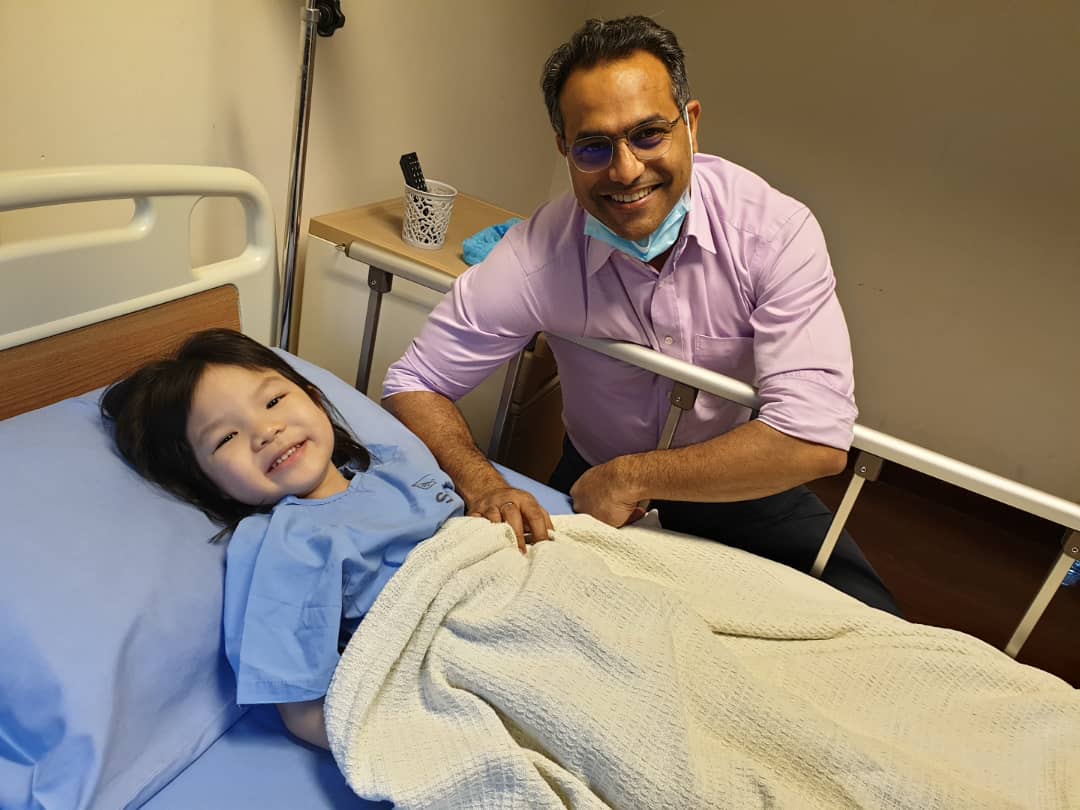
A parent's guide
Hearing that your child may need an operation can bring many questions. Understanding the condition, the available options and what recovery may involve can help you take the next step with greater confidence.
Dr. Nada Sudhakaran is a consultant paediatric surgeon and urologist who sees children in Kuala Lumpur and Petaling Jaya. Every child's situation is different; assessment and treatment recommendations are made based on individual needs.

Meet the specialist
Consultant Paediatric Surgeon & Urologist
Dr. Nada provides specialist surgical care for babies and children, including general paediatric surgery, paediatric urology and reconstructive surgery. His special interest is minimally invasive surgery, including laparoscopic or “keyhole” techniques.
He completed undergraduate and postgraduate training in the United Kingdom and has experience working in the UK and Australia before returning to Malaysia. He is listed on the specialist registers in Malaysia, the UK and Australia, as stated in his professional profile.
Areas of care
Explore common categories of conditions that may require specialist assessment. This list is for information and is not a diagnosis.
Surgical conditions present at birth or identified in newborn babies, assessed according to the child's needs.
Learn about conditions ↗Conditions affecting the urinary tract and genital development in babies and children.
Learn about conditions ↗Laparoscopic techniques that use small incisions for selected procedures when clinically appropriate.
Explore keyhole surgery ↗Assessment of common childhood conditions such as inguinal hernia, umbilical hernia and hydrocele.
Learn about conditions ↗Assessment and surgical planning for selected congenital or acquired conditions requiring reconstruction.
Learn about conditions ↗Specialist evaluation of selected conditions involving the chest in babies and children.
Learn about conditions ↗Minimally invasive surgery
Laparoscopic surgery—often called keyhole surgery—uses a small camera and specialised instruments through small incisions. For selected conditions, it may offer benefits such as smaller scars and a different recovery experience compared with open surgery.
The best approach depends on the diagnosis, the child's age and health, and the procedure required. Dr. Nada can explain the potential benefits, limitations and risks relevant to your child's situation.
Ask about treatment options ↗Conditions and treatments
Children can have different surgical needs at different stages of development. A consultation helps clarify whether a condition needs monitoring, further tests or treatment.
When to seek urgent help
If your child has severe pain, breathing difficulty, persistent vomiting, significant bleeding or appears seriously unwell, seek urgent medical attention rather than waiting for an appointment.
Includes inguinal hernia, umbilical hernia and fluid around the testicle (hydrocele). Timing and treatment depend on the type of condition and the child's age.
A testicle that has not moved into the scrotum may require specialist assessment. The recommended timing of treatment depends on clinical findings and current guidance.
Selected conditions affecting the kidneys, urinary tract or genital system may need paediatric urological evaluation.
Some conditions are present at birth or identified in the newborn period. Care planning may involve assessment, investigations and coordination with other paediatric specialists.
A lump may have many causes. A clinician can assess it and determine whether imaging, biopsy, removal or other specialist input is appropriate.
Selected conditions involving the chest may require specialist assessment and discussion of available treatment approaches.
These conditions affect bowel function or the development of the anus and rectum. Diagnosis and treatment planning require an individual specialist assessment.
Your next steps
Start with a consultation to understand your child's needs and the available options.
Contact the preferred hospital clinic to enquire about an appointment.
Share your child's symptoms, medical history and any previous test results.
Discuss possible next steps, benefits, risks and follow-up care with the doctor.
Appointments
Contact the hospital clinic to enquire about availability. For emergencies, please go to the nearest emergency department.
Find the clinic
Please contact the hospital directly to confirm current clinic hours, appointment availability and location details before travelling.
Room A405, 4th Floor, Block A
8 Jalan Bukit Pantai, 59100 Kuala Lumpur
Room 30
Jalan Templer, 46990 Petaling Jaya, Selangor
*Clinic hours and practice locations are based on publicly available information and may change. Confirm directly with the hospital before visiting.
Frequently asked questions
These general answers are a starting point. Your child's doctor can advise on the specific situation.
Paediatric surgery is a surgical specialty focused on the care of babies, children and adolescents. The exact care offered depends on the condition and the specialist's scope of practice.
Keyhole surgery is another name for laparoscopic or minimally invasive surgery. A camera and instruments are inserted through small incisions. It is suitable for some, but not all, procedures.
Not every condition requires an operation. The recommendation depends on an examination, relevant investigations and a discussion of the benefits and risks of available options.
Contact Pantai Hospital Kuala Lumpur at +603 2296 0419 or Assunta Hospital at +603 7872 3000 to enquire about appointments with Dr. Nada.
If available, bring referral letters, relevant test results, imaging reports, a list of medicines and a brief note of your child's symptoms and medical history.
Start with a conversation